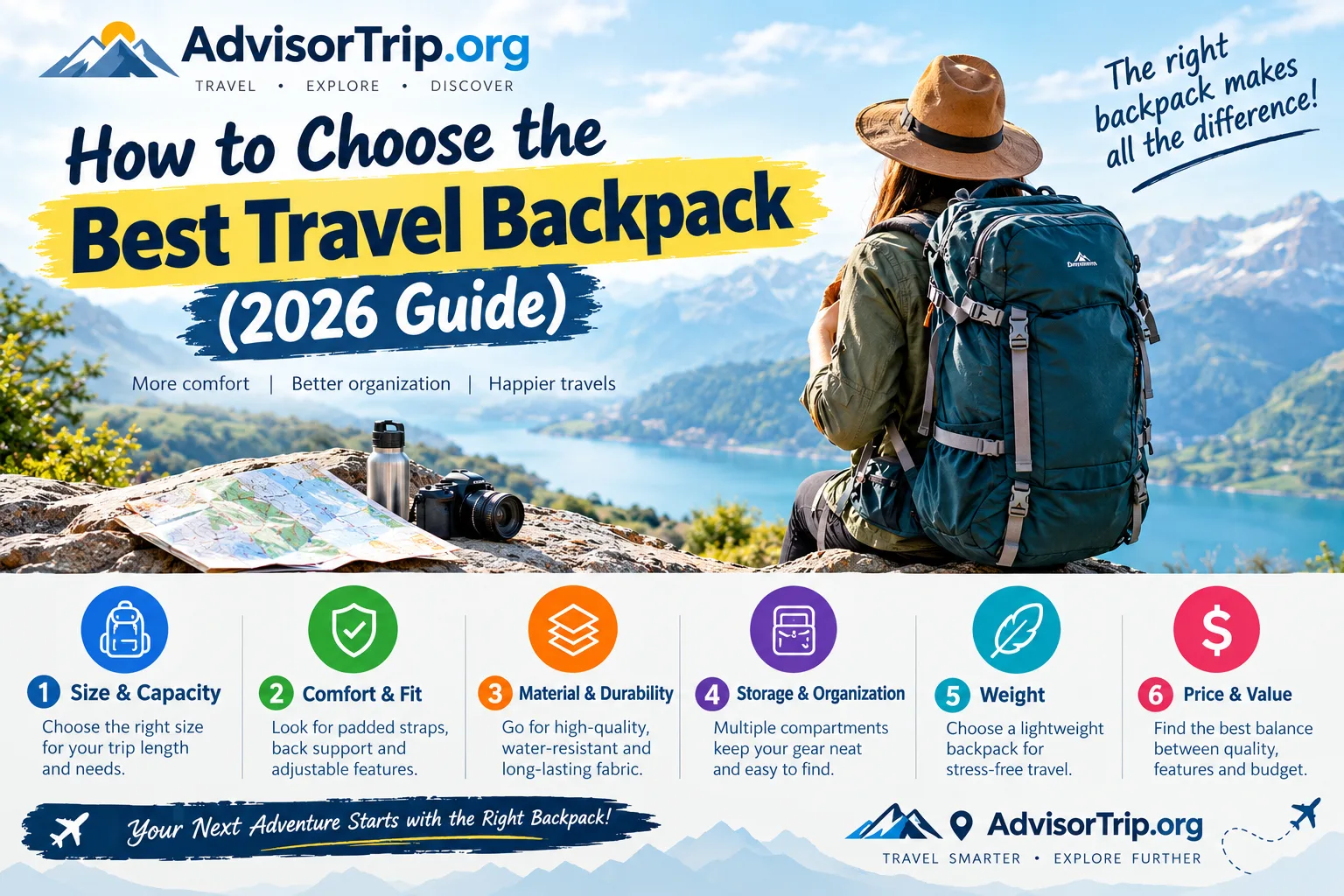
How to Choose the Best Travel Backpack (2026 Guide)
Picking the right travel backpack can make or break a trip. A good one keeps your gear organized and your shoulders happy. A bad one turns every travel day into a struggle. This guide walks through everything you need to know before buying your next travel backpack. That includes size, structure, and features worth paying for. Once you’ve picked your bag, check out our complete packing checklist for more tips on what to bring on your next trip.
Why Your Travel Backpack Matters So Much
A travel backpack isn’t just a bag. You’ll carry it through airports, up hostel stairs, and across cobblestone streets for days or weeks at a time. The right travel backpack makes movement easy. The wrong one leaves you sore, frustrated, and always digging for your passport.
Comfort matters most on longer trips. A poorly designed pack can cause real back and shoulder pain after just a few hours. That’s why fit and structure deserve just as much attention as style or price.
Choosing the Right Size
Travel backpacks come in a range of sizes, usually measured in liters. Picking the right size depends on your trip length and travel style.
20 to 30 liters: Ideal for short weekend trips or as a daypack alongside a larger main bag.
30 to 45 liters: A solid choice for one to two week trips. Many of these fit as airline carry-ons, which saves time and money.
45 to 65 liters: Better suited for longer trips, backpacking adventures, or travelers who pack more gear.
65 liters and up: Usually reserved for extended backpacking trips or trips requiring special gear like camping equipment.
Most travelers find that a 40 to 50 liter travel backpack hits the sweet spot. It holds enough for a week or two, without getting too bulky to manage.
Key Features to Look For
Carry-On Match
If you want to skip checked baggage fees, look for a bag built to meet carry-on size limits. Airlines vary in their exact rules, so check dimensions carefully before buying — the IATA carry-on baggage guidelines offer a useful general reference, though always confirm with your specific airline.
Opening Style
Top-loading travel backpacks are traditional and often more tough. Digging through them can get annoying, though. Front-loading, or “suitcase-style,” bags open flat like a suitcase instead. That makes packing and unpacking much easier.
Padded Straps and Hip Belt
A quality hip belt shifts weight from your shoulders to your hips. That makes a huge difference on long travel days. Look for a travel backpack with thick, adjustable padding in both the straps and hip belt.
Weather Resistance
Not every bag needs to be fully waterproof. Water-resistant material still helps protect your belongings during sudden rain or spills, though. Some even come with a rain cover included.
Lockable Zippers
Security matters, especially in crowded airports or on overnight trains. A travel backpack with lockable zippers adds a simple layer of protection against theft.
Compartments and Storage
A good pack usually includes multiple compartments. Separate pockets for electronics, toiletries, and clothing keep everything easy to find. You won’t need to unpack your entire bag just to grab one item.
Backpack vs Suitcase: Which Is Better?
This debate comes up constantly among travelers. A travel backpack offers hands-free movement. That’s a huge plus on uneven ground, cobblestone streets, or public transport without elevators.
Suitcases work well for travelers sticking to smooth pavements and hotel-to-hotel trips. But once stairs, gravel paths, or long walks enter the picture, a backpack usually wins out.
Many experienced travelers end up choosing a travel backpack just because it keeps both hands free. That matters more than people expect, at least until they’re juggling a phone, a coffee, and a suitcase handle all at once.
Popular Types of Travel Backpacks
Traditional Backpacking Packs
These are the classic option most people picture when they think of a travel backpack. They’re built for comfort over long distances. Many also include external straps for extra gear.
Convertible Travel Backpacks
These hybrid bags convert between backpack and suitcase-style carrying. That gives travelers flexibility depending on the situation. A convertible travel backpack works especially well for people who split their trip between cities and more rugged ground.
Daypacks
Smaller and lighter, daypacks work well as a secondary bag alongside a larger main bag. They’re perfect for day trips, hikes, or just carrying basics around a city.
Anti-Theft Travel Backpacks
These travel backpacks come with hidden zippers, slash-resistant material, and lockable compartments. They suit travelers heading to crowded tourist areas where pickpocketing stays a real concern.
How to Pack a Travel Backpack Efficiently
Packing well makes a huge difference in comfort. Heavier items should sit close to your back and near the middle of the pack. This helps keep better balance and posture.
Packing cubes are a popular tool for organizing a pack. They compress clothing and separate items by category. That makes it much easier to find things without unpacking everything.
Roll clothing instead of folding when you can. This trick saves space and cuts down on wrinkles. It also lets you fit more into your travel backpack without going over weight or size limits.
Budget vs Premium Travel Backpacks
Price ranges vary widely. Budget packs can work fine for occasional travelers or short trips. They may lack toughness over time, though.
Premium travel backpacks usually offer better zippers, stronger stitching, and more smart storage. For regular travelers, a higher-quality pack often pays off through years of reliable use.
That said, an expensive travel backpack isn’t always necessary. Plenty of mid-range options offer great toughness and comfort without the premium price tag.
What Materials Work Best
The material of a pack affects both durability and weight. Most quality bags use nylon or polyester, though the specific type makes a real difference in performance.
Ripstop nylon resists tearing well, since the weave stops small rips from spreading further. This makes it a popular choice for travel backpacks meant to handle rough conditions.
Cordura fabric offers excellent wear resistance. Many premium bags use this material for high-wear areas like the bottom and side panels, where scraping against ground or luggage racks happens often.
Polyester tends to cost less than nylon while still holding up reasonably well. It also resists UV damage better, which matters if your travel backpack sees a lot of direct sunlight.
Denier count, often shown as a number like 420D or 600D, shows thread thickness. Higher numbers generally mean tougher material, though this often adds weight too. Finding the right balance between toughness and weight depends on your travel style.
Weight Considerations
An empty pack’s weight matters more than most buyers realize. Every extra pound in the bag itself eats into what you can actually pack before hitting airline weight limits.
Lightweight travel backpacks, often made from thinner ripstop materials, work well for travelers prioritizing less weight over maximum durability. These bags typically weigh two to three pounds empty.
Standard packs with more structure, padding, and features usually weigh three to five pounds. This extra weight often comes with added comfort, though, especially around the hip belt and back panel.
Heavy-duty travel backpacks built for extended long trips or harsh conditions can weigh five pounds or more. These focus on toughness and support over less weight, which makes sense for trips involving serious physical demands.
Brands Worth Considering
Several brands have built strong reputations in the travel backpack space, each with different strengths.
Some brands focus heavily on ultralight designs, appealing to minimalist travelers who focus on packing light above all else. Others specialize in rugged, expedition-ready builds meant to survive years of heavy use across difficult terrain.
Mid-range brands often strike a practical balance, offering solid build quality without the premium price tag of high-end options. Many of these also offer better warranty coverage, which matters if you plan to use your travel backpack for years of regular trips.
Researching reviews from other travelers, especially those with similar travel styles to your own, often provides more useful insight than general marketing claims. A bag that works perfectly for a minimalist solo backpacker might not suit someone traveling with photography equipment or business attire.
Maintaining Your Travel Backpack
Proper care extends the life of any travel backpack a lot. A few simple habits make a real difference over time.
Clean your bag after trips, especially if it’s been exposed to mud, sand, or spilled liquids. Most bags can be spot-cleaned with mild soap and water, though it’s worth checking manufacturer instructions first, since some materials react poorly to certain cleaning products.
Store your travel backpack properly between trips. Keeping it in a cool, dry place prevents mold and material breakdown. Avoid leaving it compressed in a small space for extended periods, since this can damage the internal frame and padding.
Check zippers, straps, and stitching now and then. Catching small issues early, like a fraying strap or a loose seam, prevents bigger problems from growing mid-trip when repairs are much harder to manage.
Useful Accessories
A few accessories can improve how well your pack works day to day. These additions often cost little but make a noticeable difference in convenience.
A rain cover protects your travel backpack from sudden downpours, especially useful if your bag isn’t fully waterproof on its own. Many premium bags include one, but you can buy a separate cover for older or budget bags too.
Compression straps help stabilize the load inside a travel backpack, preventing items from shifting around during movement. This keeps the pack balanced and comfortable, even when it’s not completely full.
A luggage lock adds extra security for your bag, especially useful during flights when your bag goes out of sight in checked baggage. TSA-approved locks let airport security open the bag if needed without cutting the lock.
Packing cubes, mentioned earlier, deserve a second mention here since they genuinely transform how a travel backpack feels to use. Once you try organizing a bag with cubes, going back to loose packing feels chaotic by comparison.
A separate toiletry bag with a hanging hook makes bathroom stops easier, especially in hostels or shared accommodations where counter space runs limited. Look for one that fits neatly into your bag’s assigned compartment.
Travel Backpacks for Different Trip Types
City Trips
For city-focused travel, a smaller, more simple travel backpack usually works best. You won’t need rugged outdoor features, so focus on style, storage, and carry-on match instead.
Backpacking Trips
Multi-week backpacking calls for a larger, more durable pack with a solid frame and strong hip support. Comfort during long carrying stretches becomes far more important than sleek looks.
Business Travel
Business travelers often want a travel backpack with a padded laptop compartment, professional styling, and enough structure to keep documents and electronics protected. Carry-on size remains important here too, given how often business trips involve tight connections.
Adventure and Outdoor Travel
Trips involving hiking, camping, or rough ground call for a bag built specifically for outdoor use. Look for reinforced bottoms, external attachment points for gear, and weather-resistant materials that can handle real wear and tear.
Family Travel
Traveling with kids often means carrying extra gear, so a larger travel backpack with flexible compartments works well. Some parents prefer a convertible bag that can expand or compress depending on what the trip requires that day.
Tips for Buying Your Next Travel Backpack
- Try it on loaded, not empty. An empty travel backpack always feels lighter than it will once packed.
- Check the return policy, since comfort often only becomes clear after real use.
- Measure your torso length, since backpack sizing depends on more than just liters.
- Consider your destination, since rugged ground calls for different features than city travel.
- Don’t oversize your bag, since a bigger bag tempts you to overpack.
Frequently Asked Questions
What size travel backpack do I need for a two-week trip? Most travelers find that a 40 to 50 liter bag works well for a two-week trip. This size holds enough clothing and gear without becoming too heavy or bulky to carry comfortably.
Can a travel backpack fit as a carry-on? Many bags under 45 liters meet normal carry-on size limits, though this varies by airline. Always check exact dimensions before your trip to avoid gate-checking fees.
How much should I spend on a travel backpack? Prices range widely, from budget options under $100 to premium bags costing $300 or more. Mid-range options, typically $100 to $200, often offer the best balance of quality and value for most travelers.
Are travel backpacks better than suitcases? It depends on your trip. A backpack works better for uneven terrain, stairs, and hands-free movement, while a suitcase suits smoother travel between hotels and airports.
How long do travel backpacks typically last? A well-made pack can last five to ten years with proper care, especially if you choose quality materials and maintain it between trips.
Final Thoughts
Finding the right travel backpack comes down to matching size, features, and comfort to your travel style. Whether you’re backpacking through hostels or taking a two-week city trip, the right bag turns a stressful packing process into an easy one. Take time to try a few options. Check the fit while it’s loaded. Choose based on how you actually travel, not just how a bag looks on a shelf.
At the end of the day, the best travel backpack is the one that fits your body, your trip, and your budget, not necessarily the most expensive or most popular option on the market. Spend a little extra time researching before you buy, and you’ll end up with a bag that makes every future trip that much easier.