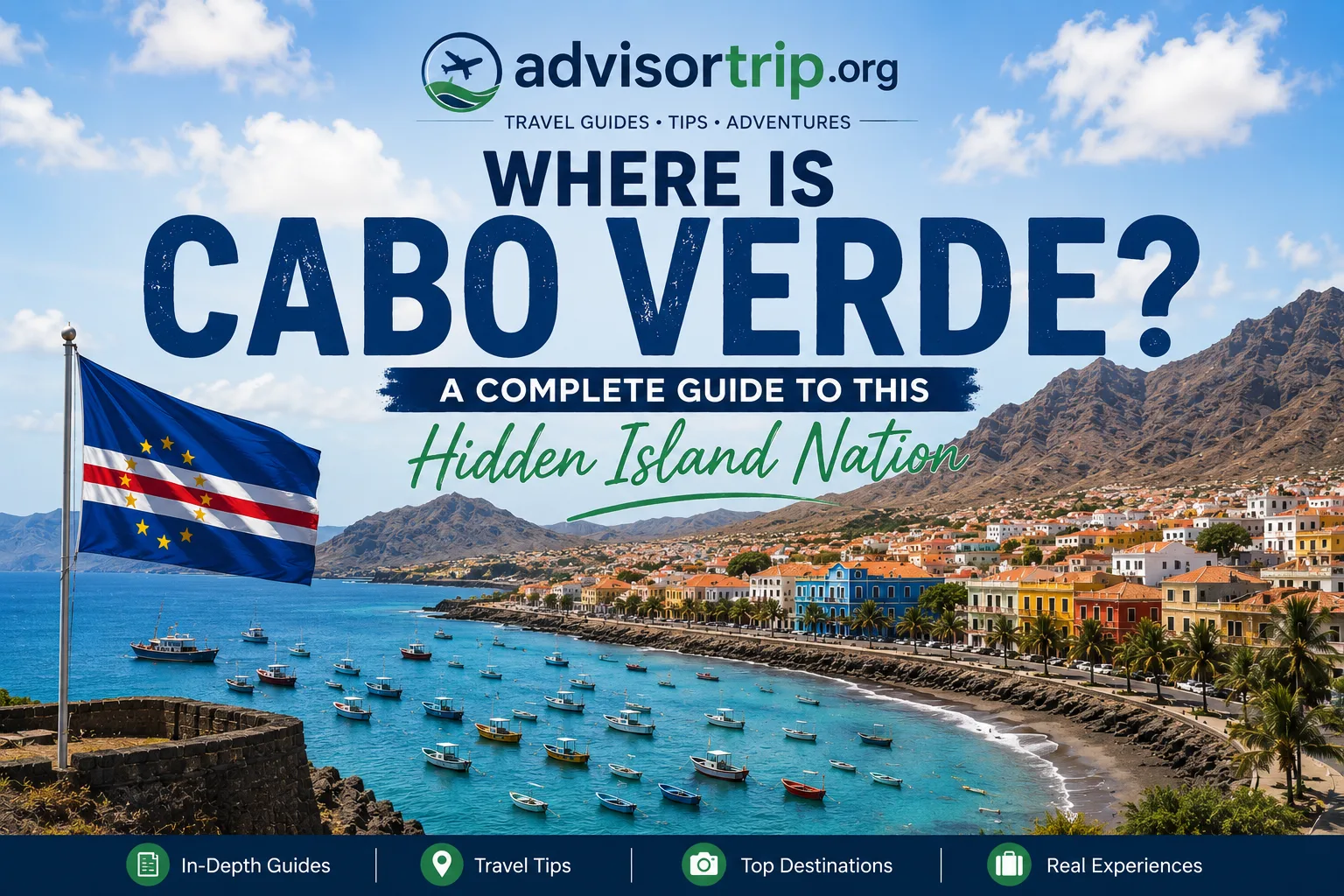
Where Is Cabo Verde? A Complete Guide to This Hidden Island Nation
Have you ever scrolled through flight deals and spotted a cheap ticket to somewhere called Cabo Verde? You probably paused and thought, wait, where is Cabo Verde exactly? You’re not alone. This small island nation stays under the radar for a lot of travelers. It’s been quietly building a name for itself as one of the best-kept secrets in the Atlantic, though. Let’s clear things up and actually answer where is Cabo Verde, along with why it might deserve a spot on your travel list.
So, Where Is Cabo Verde Located?
Here’s the short answer. Cabo Verde sits off the west coast of Africa, out in the middle of the Atlantic Ocean. Picture a map of Africa, with Senegal on the coast. Cabo Verde sits roughly 600 kilometers, or about 370 miles, west of that coastline. It’s not attached to the mainland at all. It’s a group of islands floating out in open ocean, closer to nothing than you might expect.
People searching “where is Cabo Verde” often expect it to sit somewhere in the Caribbean. That’s because the name sounds so tropical. That mix-up happens a lot. But no. This is purely an African island nation. It stays tied to West Africa, both geographically and culturally, despite its Portuguese colonial roots.
What Kind of Place Is Cabo Verde, Exactly?
Before we go further, it helps to understand what kind of country we’re even talking about.
Cabo Verde isn’t one single island. It’s an archipelago made up of ten main islands, plus a handful of smaller islets scattered around them. These islands split into two main groups based on wind direction. The Windward Islands, or Barlavento, sit in the north. The Leeward Islands, or Sotavento, sit in the south.
Each island has its own personality. Santiago, home to the capital city of Praia, feels lively and historic. Sal and Boa Vista draw beach lovers with their long stretches of white sand. Fogo, meanwhile, is home to an actual active volcano. Locals still farm coffee and grapes right around it, which feels wild once you stop and think about it.
Why People Keep Asking Where Is Cabo Verde
Honestly, part of the reason so many people ask where is Cabo Verde comes down to one thing: visibility. This spot doesn’t get the same attention as other African destinations. It doesn’t get the same spotlight as places like the Canary Islands or Cape Town. And that’s even though it’s not too far from either one. It also doesn’t help that the name gets confused with Cape Verde. That’s just the English version of the same country. Same place, different language.
Cabo Verde only gained independence in 1975, after centuries as a Portuguese colony. Before that, it played a dark role in the transatlantic slave trade, serving as a stopover point between Africa and the Americas. You can read more about this history on UNESCO’s page on Cabo Verde. That history still shapes the culture today, blending African roots with Portuguese influence in a way that feels genuinely unique.
If you’re planning a wider trip through West Africa or nearby island destinations, check out our Africa Travel Guide on AdvisorTrip for more inspiration.
Getting a Better Sense of Where Cabo Verde Sits on the Map
If you want to actually visualize where is Cabo Verde on a map, picture this. Draw a line straight west from Senegal, out into the Atlantic. Keep going for a few hundred kilometers, and you’ll hit the islands. They sit at roughly 16 degrees north latitude, putting them at a similar latitude to places like southern Mexico or parts of India, just way out in the ocean instead of on a continent.
This location matters more than you’d think. Being surrounded by open ocean gives Cabo Verde a mild, dry climate for most of the year, without the intense humidity you’d expect this close to the equator. Trade winds keep things breezy, especially on islands like Sal, which has become a magnet for windsurfers and kitesurfers because of it.
What Language Do They Speak in Cabo Verde?
Once you know where is Cabo Verde, the next natural question is usually about language.
Portuguese is the official language, a leftover from colonial rule. But walk around any town, and you’ll hear Cabo Verdean Creole (Kriolu) far more often in daily conversation. It’s a blend of Portuguese and West African languages, and it varies slightly from island to island. Most people who ask where is Cabo Verde don’t realize just how distinct this Creole culture actually feels once you’re there.
English isn’t widely spoken outside tourist zones, so a few basic Portuguese phrases go a long way if you’re planning a trip.
The Music That Put Cabo Verde on the Map
If you’ve heard of Cabo Verde before reading this, there’s a decent chance it’s because of music. Cesária Évora, often called the “Barefoot Diva,” brought a genre called morna to international audiences. It’s a slow, soulful style of music, often compared to Portuguese fado, filled with longing and nostalgia. Locals call this feeling sodade, a word that doesn’t translate perfectly into English but roughly means a deep, bittersweet longing.
Music runs deep here, and it’s tied closely to the islands’ history of migration. So many Cabo Verdeans have left over the decades to work abroad that the music often reflects that sense of distance and homesickness, which somehow makes it even more moving once you know the backstory.
Why Cabo Verde Is Worth Visiting
Once people figure out where is Cabo Verde, the next question is usually whether it’s actually worth the trip. Short answer: yes.
The beaches on Sal and Boa Vista rival anywhere in the Caribbean, minus the crowds. Santiago offers colorful colonial architecture and a genuinely rich cultural scene. Fogo gives you the rare chance to hike an active volcano and taste wine grown in volcanic soil. And São Vicente, home to the city of Mindelo, throws one of the best Carnival celebrations you’ve probably never heard of.
Beyond the scenery, the pace of life stands out. Things move slower here. Nobody’s in a rush, and that unhurried rhythm tends to rub off on visitors within a day or two of arriving.
How to Get to Cabo Verde
Now for the practical part: once you know where is Cabo Verde, how do you actually get there? Flights connect Cabo Verde to several European cities, including Lisbon, Amsterdam, and Milan, with more routes opening up as tourism grows. Direct flights from the United States remain limited, so many travelers connect through Europe or nearby African hubs.
Once you know where is Cabo Verde and you’re ready to book, Sal Island’s airport tends to be the main entry point for tourists, given its proximity to the resort areas. Praia’s airport on Santiago serves more of the cultural and business travelers heading to the capital.
What’s the Weather Like?
Weather is another common question right after where is Cabo Verde. Cabo Verde stays warm and dry for most of the year, with temperatures usually sitting between 75°F and 85°F (24°C to 29°C). There’s a brief rainy season between August and October, mostly affecting the more mountainous islands like Santiago and Fogo. The drier islands, like Sal and Boa Vista, barely see rain at all, which is part of why they’ve become such popular beach destinations.
Currency and Practical Travel Info
Now that you know where is Cabo Verde, let’s cover a few practical details before you book that flight.
The local currency is the Cabo Verdean escudo, though euros are widely accepted, especially in tourist areas, given the strong historical and economic ties to Portugal and the wider EU. Credit cards work in bigger hotels and resorts, but it’s smart to carry cash for smaller shops, local restaurants, and taxis, especially outside the main tourist zones.
Common Misconceptions About Cabo Verde
So many people genuinely don’t know where is Cabo Verde before researching a trip, and a few misconceptions keep coming up again and again.
First, it’s not part of the Caribbean, despite what the name might suggest to some. Second, it’s not a single island. It’s a full archipelago, and each island offers a genuinely different experience. Third, while French gets spoken in parts of West Africa, Cabo Verde’s colonial and linguistic ties run through Portugal, not France.
Frequently Asked Questions
Where is Cabo Verde in relation to Africa? Cabo Verde sits about 600 kilometers off the coast of Senegal, in the Atlantic Ocean. It’s not attached to the African mainland at all, which is exactly why so many people ask where is Cabo Verde when they first hear the name.
Is Cabo Verde part of Africa or Europe? Geographically and politically, Cabo Verde counts as part of Africa, even though its culture carries strong Portuguese and European influences from centuries of colonization.
Why do people confuse where Cabo Verde is with the Caribbean? The tropical-sounding name and the beautiful beaches lead a lot of people to assume Cabo Verde sits somewhere near the Caribbean. In reality, it’s thousands of miles away, out in the Atlantic near West Africa.
How far is Cabo Verde from mainland Africa? Roughly 600 kilometers, or about 370 miles, separate the islands from the nearest point on the African coast, which sits near Senegal.
Do I need to know Portuguese to visit Cabo Verde? It helps, but it’s not required. Many people in tourist areas speak some English, and Cabo Verdean Creole remains the most commonly spoken language day to day.
Planning Your First Trip
Once you’ve figured out where is Cabo Verde and decided it’s worth visiting, a little planning goes a long way. Most travelers start with either Sal or Boa Vista if beaches top their list, since both islands offer direct flights and an easy introduction to the country. Those more interested in culture and history often head straight to Santiago instead, where the capital city of Praia offers museums, markets, and colonial architecture worth exploring on foot.
A week is usually enough time to get a real feel for one or two islands, though inter-island flights and ferries make it possible to combine a beach stint with a cultural stop if you have more time to spare. Just keep in mind that transportation between islands can be limited, so booking connections in advance saves a lot of headache once you’re there.
Packing light works well here, given the warm climate year-round. A swimsuit, comfortable walking shoes, and a light jacket for cooler evenings usually cover most of what you’ll need. Sunscreen is a must, especially on the drier islands where the sun stays strong for most of the day.
Final Thoughts
So, where is Cabo Verde? It’s an island nation floating in the Atlantic Ocean, a few hundred kilometers off the coast of West Africa, closer to Senegal than almost anywhere else on the map. It’s a place shaped by Portuguese colonization, African roots, volcanic landscapes, and some of the most soulful music you’ll ever come across.
Once you know where is Cabo Verde, it’s honestly hard not to start looking up flights. Whether you’re drawn in by the beaches, the music, the volcano hikes, or just the appeal of visiting somewhere most people haven’t heard of yet, Cabo Verde offers a genuinely different kind of island getaway. It’s remote, it’s real, and it’s still mostly under the radar, at least for now.
Next time someone asks you where is Cabo Verde, you’ll have a real answer ready, along with a decent case for why it deserves a spot on their travel list too.




One thought on “Where Is Cabo Verde? A Complete Guide to This Hidden Island Nation”