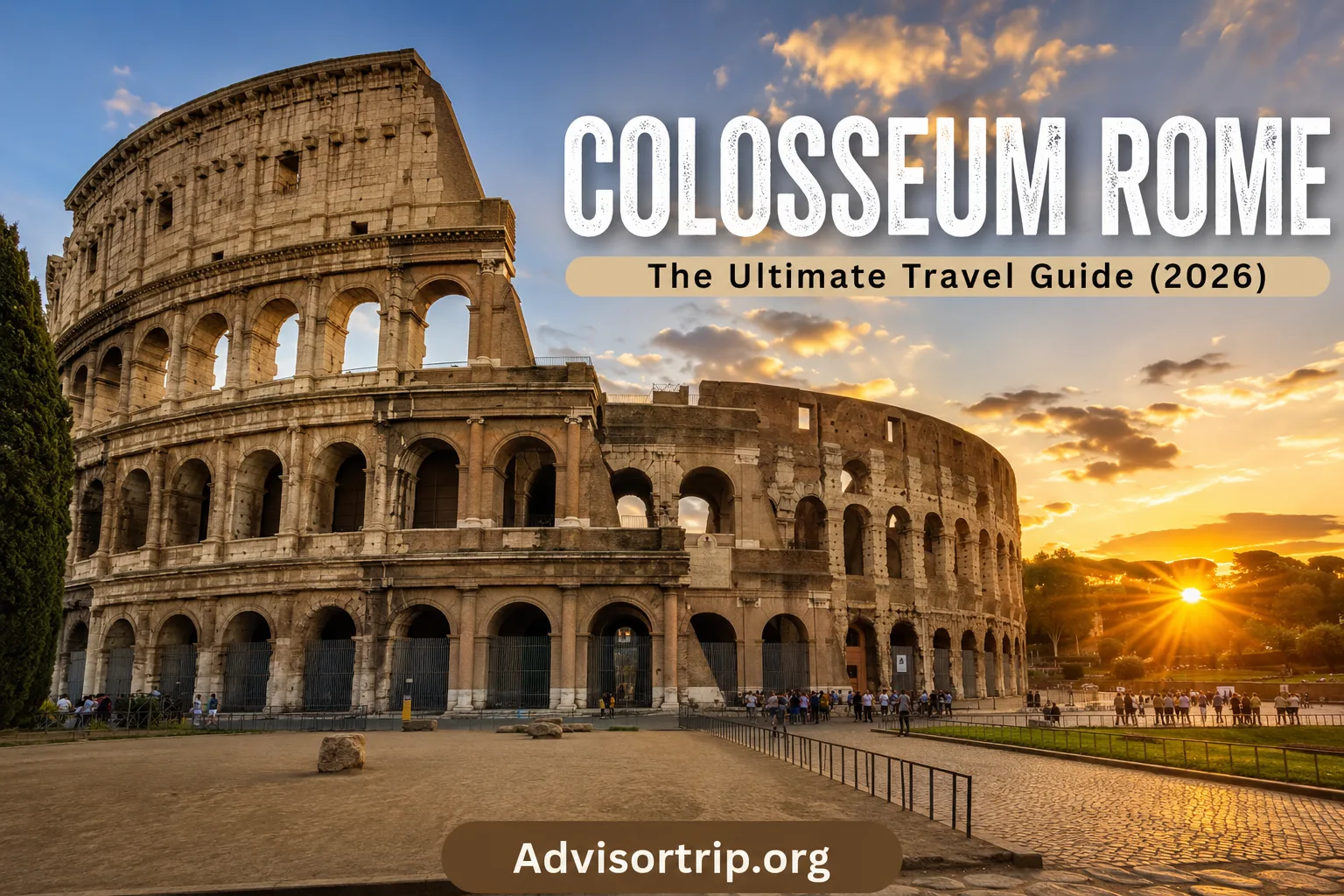
Colosseum Rome: The Ultimate Travel Guide (2026)
If you’ve ever seen a photo of Rome, chances are it included this building. Colosseum Rome isn’t just a stop on the tourist trail. It’s the kind of place that looks even bigger in person than in every picture you’ve seen. I want to walk you through what it actually takes to visit well. That means the history worth knowing before you go, how to get inside without wasting half your day in line, and a few things I wish someone had told me before my first visit.
A Brief History of Colosseum Rome
The story starts around 70-72 AD, when Emperor Vespasian ordered construction to begin. His son Titus finished the job about eight years later, in 80 AD. Builders used travertine limestone, volcanic rock, and concrete — and somehow managed to create a space that could seat anywhere from 50,000 to 80,000 people, depending on the event.
For a couple hundred years, this was basically the center of Roman social life. Emperors threw games here to win over the crowd. The oval-shaped design was genuinely ahead of its time. It meant every single seat had a clear view of the arena. Underneath the floor sat a maze of tunnels and chambers called the hypogeum. Animals, gladiators, and stage equipment waited there before being hauled up into the arena.
Then things went downhill, literally and figuratively. Earthquakes chipped away at the structure over the centuries. During the medieval and Renaissance periods, people just took the stone in Colosseum Rome. Entire churches and palaces around Rome were built using materials stripped from here. Somehow, despite all that, enough of it survived. A century of careful restoration work has kept it standing for us to walk through today.
These days, Colosseum Rome holds UNESCO World Heritage status. It also made the list of New Seven Wonders of the World. Millions of people show up every year just to stand where gladiators and emperors once stood. Honestly, it’s one of those buildings that photographs well but somehow means more once you’re standing right in front of it.
The Engineering Behind an Ancient Marvel
What gets me every time is realizing this wasn’t just old — it was genuinely clever. The design behind Colosseum Rome runs on arches and vaults made of concrete. Romans figured out this material long before anyone else. That’s how they managed to build four stories high without the whole thing collapsing under its own weight.
Seating wasn’t random either. It followed the social hierarchy exactly. Emperors and senators got the closest seats. Regular citizens sat further up top in Colosseum Rome. There was even a retractable awning, the velarium. Sailors could extend it using ropes and pulleys to keep the sun off people during long events. Someone actually thought that through.
Below the arena floor, the hypogeum was where the real logistics happened — tunnels, cages, elevators, all designed to make animals and performers suddenly appear through trapdoors mid-show. A good chunk of it is still visible if you take one of the specialized tours.
Why Colosseum Rome Is Worth Visiting
A few reasons this belongs on your itinerary, not just your Instagram feed:
- The history is unmatched. Not many places on earth let you stand this close to something this old and this significant.
- The engineering still influences stadiums today. Modern arena design owes a lot to what happened here first.
- It’s centrally located. You’re within walking distance of the Roman Forum, Palatine Hill, and a handful of other major sites.
- You can go underground. Special tours take you into the hypogeum, an area standard tickets don’t cover.
- It’s still, in a small way, alive. Occasional cultural events happen here, which keeps it connected to the city rather than feeling like a museum piece.
Best Ways to Experience Colosseum Rome
Standard Entry Ticket
This is your basic option for visiting Colosseum Rome. It actually covers more than just the amphitheater. It includes the Roman Forum and Palatine Hill too, since they’re bundled together. It’s the cheapest way in. Skip the pre-booked time slot, though, and you might be standing in line for a while.
Guided Tours
If you want the history to actually mean something rather than just reading a plaque, a guided tour is worth it. Guides tend to point out the small details you’d otherwise walk right past — like the faint seating markers that once separated different social classes.
Underground and Third-Tier Access
Want to go beyond the standard visit? Tickets that include the hypogeum and the upper third tier open up areas most visitors never see, including some genuinely great views over the Roman Forum from up top. These only come as part of a guided experience, though.
Night Tours
During the warmer months, evening tours occasionally run — and they change the whole vibe of the place. Walking through torch-lit corridors after dark hits differently than a crowded midday visit. Fair warning: these sell out fast.
Best Time to Visit Colosseum Rome
Early morning, right at opening, or late afternoon closer to closing time — those are your best windows. Midday gets packed, especially from May through September, and the lines reflect that.
Weather-wise, spring (April–May) and fall (September–October) are your sweet spot. You get comfortable temperatures without Rome’s brutal summer heat. Winter brings smaller crowds too, though a few hours might be trimmed from opening times. Honestly, the cooler weather can make for a more relaxed visit overall.
Whenever you go, book online ahead of time. Walk-up lines during peak season can eat hours out of your day, and the good time slots sell out well in advance.
How to Get to Colosseum Rome
It sits at Piazza del Colosseo, right in the historic center, and getting there is pretty painless:
- Metro: Line B stops right at Colosseo Station, practically at the entrance.
- Bus: Several routes drop you within a short walk.
- Walking: If you’re staying centrally, you can probably just walk there.
Skip driving. Parking is limited, and the streets are packed with pedestrians. Rome’s historic center also has restricted traffic zones that trip up a lot of visitors unfamiliar with the rules.
Nearby Attractions Worth Visiting
Since Colosseum Rome puts you right in the heart of ancient Rome, it makes sense to pair your visit with a few other spots nearby:
- Roman Forum — the old political and social hub of the city, a short walk away and included in your ticket.
- Palatine Hill — great views over both the Forum and the amphitheater, plus the ruins of old imperial palaces.
- Arch of Constantine — beautifully preserved and free to walk right up to.
- Colle Oppio Park — a quieter, greener spot nearby, good for resting and snapping photos through the trees.
Honestly, stacking these together into one day gives you one of the richest historical experiences in Europe. You’re basically tracing the footsteps of emperors and everyday Romans across a single afternoon.
Ticket Prices and Booking Options
Pricing for Colosseum Rome depends on what kind of access you’re after. Standard tickets are the cheapest route in. They usually stay valid for two consecutive days, covering the amphitheater, Roman Forum, and Palatine Hill together. Discounts often apply for younger visitors, students, and certain EU citizens. Kids under a certain age typically get in free.
Guided tours cost more. But you’re paying for someone who actually knows the history, which is worth it if you want context beyond what’s written on the signs. Underground and third-tier tickets sit at the top of the price range, given the limited group sizes and mandatory guide requirement.
One thing worth knowing: only buy tickets through official channels or the in-person ticket office. Third-party sellers hanging around the entrance often charge more than it’s worth. Going official guarantees your time slot is actually valid.
Some travelers bundle their visit with other big Roman attractions too — the Vatican Museums, a hop-on-hop-off bus — which can simplify planning if you’re trying to see a lot of the city without booking everything separately.
What to Expect Once You’re Inside
Walking into Colosseum Rome for the first time is genuinely a moment. The scale hits you almost immediately. Tiered stone seating rises up around you, and open sky sits where that old awning system used to stretch. It’s bigger than photos make it look.
Multilingual signage explains what you’re looking at throughout. There’s also an official audio guide app if you’d rather explore at your own pace than join a group. You’ll find restrooms, water fountains, and a small gift shop on-site. Bringing your own water bottle is smart, though, especially in summer.
Photos are fine pretty much everywhere, and honestly the interior arches and corridors give you just as many good shots as the famous exterior. Flash gets discouraged in some spots to protect the old stonework.
Combining Your Visit With the Rest of Rome
Most people don’t stop here. They build a whole day of sightseeing around it. After the morning here, plenty of visitors head on foot toward the Trevi Fountain, the Pantheon, or Piazza Navona. All of these sit within reasonable walking distance or a short cab ride.
Given how much history is crammed into this part of the city, don’t try to cram it all into one day if you can help it. Splitting ancient Rome and the rest of the historic center across two days tends to feel a lot less rushed and a lot more memorable.
Tips for First-Time Visitors to Colosseum Rome
- Book tickets online ahead of time — especially in summer.
- Get there early. Beats both the heat and the crowds.
- Wear real walking shoes. The ground is old, uneven stone.
- Bring water, particularly if you’re visiting during hot months.
- Grab the combined ticket with the Roman Forum and Palatine Hill — it’s already bundled in.
- Consider a guided tour if you actually want to understand what you’re looking at.
- Check the weather — most of this visit happens outdoors.
- Watch your valuables. Crowded tourist spots attract pickpockets.
- Download an offline map beforehand in case your data’s spotty.
A Bit of Local Etiquette and Safety
Like any major attraction, the area around Colosseum Rome pulls big crowds year-round. So here are a few practical heads-ups. People posing as unofficial “guides” sometimes approach near the entrance offering last-minute tours or tickets. Skip them and stick to official booking. Same goes for street vendors offering photos with costumed “gladiators.” They’ll usually expect payment even if that wasn’t made clear upfront, so ask about cost before agreeing to anything.
Dress for comfort, but don’t underestimate Rome’s summer sun. There’s not much shade out there. A hat, sunscreen, and a water bottle genuinely make a difference. Restrooms exist near the entrance, though they can get busy during peak hours.
And, obviously, respect the place. Don’t climb on the ruins or touch the ancient surfaces more than you have to. It’s not just against the rules — it actually damages a structure that’s already survived nearly two thousand years. Treat it with a bit of care, and it’ll be standing for whoever comes after you.
The Legacy It Left Behind
What’s easy to miss is just how much this one building shaped the world after it. The basic idea of a large, tiered arena built for public spectacle didn’t disappear with Rome. It got copied, again and again, for the next two thousand years.
Modern stadiums still borrow the same core logic. Tiered seating that gives everyone a clear sightline, multiple entrances designed to move huge crowds in and out quickly, a central arena floor surrounded on all sides. Engineers today study the structure not as a relic, but as an early masterclass in crowd management and large-scale public architecture.
Even the word itself has traveled. “Colosseum” gets used loosely today to describe any large, dramatic arena, which says something about how deeply this one building has worked its way into how we think about public spectacle in general.
Accessibility Information
Some parts of Colosseum Rome have been adapted for visitors with mobility needs. Ramps and designated routes cover the arena floor level. That said, areas like the underground hypogeum and upper tiers involve genuinely ancient, uneven surfaces and stairs. These aren’t fully accessible. If you have specific needs, it’s worth checking official visitor info before you plan your trip to Colosseum Rome.
Frequently Asked Questions About Colosseum Rome
Do I need to book tickets in advance? Yes — Colosseum Rome is one of the most visited sites on the planet, and walk-up lines during peak season can be brutal.
How long does a visit take? Most people spend two to three hours here, though pairing it with the Roman Forum and Palatine Hill can turn it into a half-day outing.
Is Colosseum Rome accessible for visitors with mobility issues? Partially. Some areas are wheelchair accessible, but sections like the hypogeum have limited access given the site’s age.
Can I visit Colosseum Rome at night? Occasionally, yes — select evening tours run during warmer months and offer a totally different vibe from the daytime crowds.
What should I wear? Comfortable shoes, weather-appropriate clothing — you’ll be outside on uneven ground for most of the visit.
Final Thoughts
A visit here isn’t just a photo op. It’s genuinely a walk through nearly two thousand years of history, engineering, and human drama. Whether you’re exploring the arena floor, going underground into the old chambers, or just admiring it from the street outside, Colosseum Rome remains one of the most powerful reminders of the ancient world still standing today. Book early, plan ahead, and give yourself the time to actually take it in.
Very few places reward a little planning the way this one does. Show up early, and take a moment to understand what you’re actually looking at. You’ll walk away with a much deeper appreciation than someone who treats it as a quick checklist stop. First trip to Italy or fifth, Colosseum Rome has a way of feeling just as impressive every single time.
For a lot of travelers, this ends up being the single most memorable stop of their entire trip. It’s a place where ancient history stops being something you read about and starts being something you can physically stand inside of, arch by arch, tier by tier. Give it the time it deserves, and it’ll probably stick with you long after the trip is over.