The Ultimate Vietnam Travel Guide for Beginners: Everything You Need to Know
Planning your first trip to Southeast Asia? Congratulations! You have chosen one of the most vibrant, affordable, and welcoming countries in the world. Vietnam is a land of dramatic landscapes, bustling cities, ancient history, and some of the best street food on the planet.
For a first-time traveler, Vietnam can feel overwhelming at first. The traffic is chaotic, the language barrier exists, and the sheer number of destinations can make your head spin. This Vietnam travel guide for beginners is designed to cut through the noise and help you plan an unforgettable journey.
1. When is the Best Time to Visit?
Vietnam is long and narrow, meaning the weather varies drastically from North to South.
- The North (Hanoi, Ha Long Bay): Experiences four seasons. Winters (Dec–Feb) can get quite chilly, while summers (June–Aug) are hot and humid. The best time to visit is Spring (March–April) or Autumn (September–November).
- Central Vietnam (Da Nang, Hoi An): Best visited from February to May when the weather is warm and dry. Avoid the rainy season from September to December.
- The South (Ho Chi Minh City, Mekong Delta): There are two main seasons: Dry (Nov–April) and Rainy (May–Oct). The weather is generally warm year-round.
Pro-Tip: If you are planning to travel the whole country, aim for March or April. The weather is generally pleasant from North to South, and you avoid the peak monsoon rains.
2. Visa Requirements
Before you book your flight, check the visa situation. Vietnam offers an e-visa for citizens of many countries. You must apply for this on the official government website before you arrive. Don’t leave this to the last minute; processing usually takes 3-5 business days.
3. The Classic Beginner Route (North to South)
If you have 10 to 14 days, don’t try to see every corner of the country. Stick to the classic “Dragon” route.
Hanoi (The Cultural Heart)
Start in the capital. It’s chaotic, noisy, and absolutely charming. Wander the Old Quarter, drink Egg Coffee, and walk around Hoan Kiem Lake. Don’t miss a day trip to Ha Long Bay or Ninh Binh.
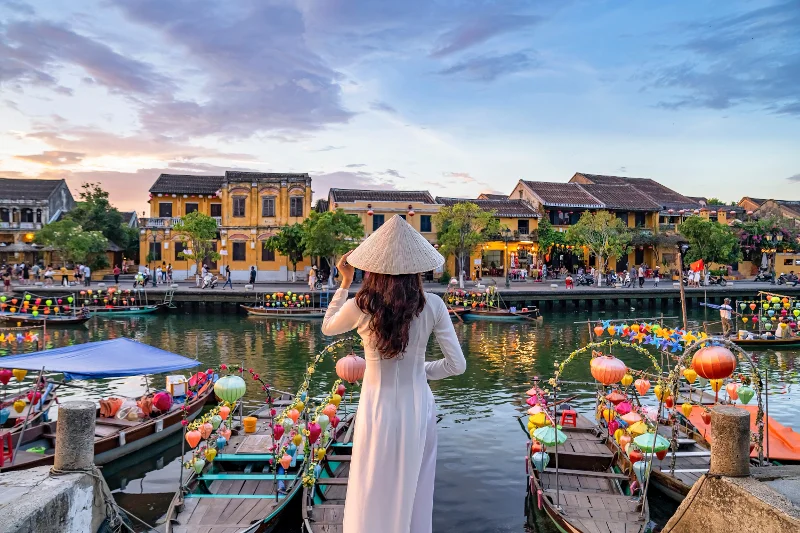
Hoi An (The Lantern City)
Fly to Da Nang and take a 30-minute taxi to Hoi An. This UNESCO World Heritage site is famous for its yellow-walled architecture and thousands of colorful lanterns. It is the perfect place to relax, get custom-tailored clothes, and enjoy the beach.
Ho Chi Minh City (The Modern Pulse)
End your trip in the South. Visit the War Remnants Museum, explore the Cu Chi Tunnels, and experience the modern rooftop bars. The city is high-energy and a stark contrast to the slow-paced charm of Hoi An.
4. Budgeting: How Much Will It Cost?
Vietnam is incredibly budget-friendly.
- Budget Travelers: You can comfortably travel for $30–$40 per day, including hostels, street food, and local transport.
- Mid-Range Travelers: With $60–$80 per day, you can stay in nice boutique hotels, eat in sit-down restaurants, and take domestic flights between major cities.
Currency: The currency is the Vietnamese Dong (VND). It’s a high-denomination currency (you will feel like a millionaire!), so check your zeros carefully before paying.
5. Street Food Survival Guide
Vietnam is a food lover’s paradise. If you are a beginner, follow these three rules to stay safe:
- Follow the Crowds: If a stall is packed with locals, the food is fresh and delicious.
- Look for High Turnover: High turnover means food doesn’t sit out.
- Drink Bottled Water: Always use bottled water for drinking and brushing your teeth.
Must-Try Dishes:
- Pho: The iconic noodle soup.
- Banh Mi: A Vietnamese baguette sandwich (a fusion of French and Vietnamese influence).
- Bun Cha: Grilled pork with noodles (famous in Hanoi).
6. Transportation Hacks
- Download “Grab”: It is the Southeast Asian version of Uber. It works for both cars and motorbikes. Prices are fixed, so you don’t have to argue with taxi drivers.
- Domestic Flights: Vietnam is long. To save time, use domestic airlines like Vietnam Airlines or VietJet to hop between major regions.
- Crossing the Street: This is a classic beginner’s fear. The trick? Just walk slowly and predictably. Do not run, and do not stop. The traffic will flow around you like water around a rock. It sounds terrifying, but you will master it by day two.
7. Essential Tips for a Smooth Trip
- Learn a few words: Learning “Xin chao” (Hello) and “Cam on” (Thank you) will earn you huge smiles from locals.
- Stay Connected: Buy a local SIM card at the airport upon arrival. It is cheap and data is fast.
- Respect the Culture: When visiting temples, cover your shoulders and knees.
Vietnam is a country that stays with you long after you leave. It is chaotic, yes, but it is also one of the most authentic travel experiences you can have. Pack your bags, keep an open mind, and get ready for an adventure of a lifetime!