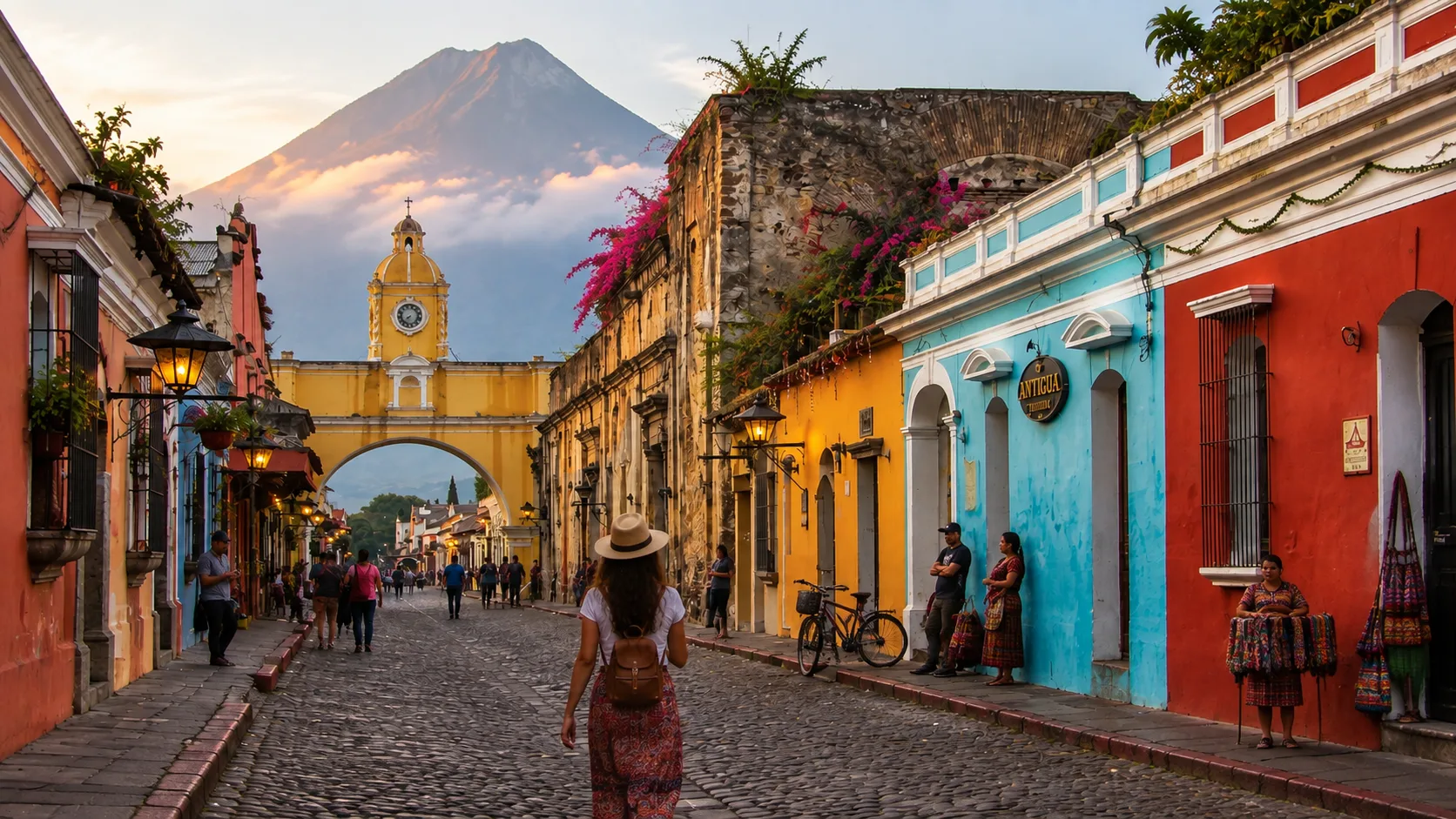
Guatemala Luxury Travel Guide 2026: Colonial Grandeur Meets Volcanic Wilderness
Say “Guatemala” to most people and they picture backpackers, hostels, maybe a chicken bus. Which is exactly why the luxury side of it catches people off guard. You can eat a candlelit dinner inside a 400-year-old convent here. You can watch an active volcano glow orange from your hotel terrace with a glass of wine in hand. You can take a boat across a lake ringed by three volcanoes and it doesn’t feel like a curated tourist moment — it just feels like where you are. In 2026, Guatemala is still one of the more underrated luxury picks in Central America. Colonial boutique hotels in Antigua, lakeside retreats on Lake Atitlán, jungle lodges near Tikal — most of it runs $200 to $700 a night, sometimes more for the really exclusive private villas.
Quick Overview
| Detail | Info |
|---|---|
| Best For | Culture-and-adventure travelers, honeymooners who want something different, volcano/lake scenery lovers |
| Best Time to Visit | November to April (dry season) |
| Avg. Luxury Trip Cost | $200 – $700+ per night |
| Nearest Airport | La Aurora International Airport (GUA), Guatemala City |
| Visa Requirement | Visa-free for most Western nationalities (up to 90 days) |
| Currency | Guatemalan Quetzal (GTQ) — USD accepted in many tourist areas |
| Language | Spanish (English common in tourist hospitality) |
Why Guatemala, Specifically?
Two things really carry the country’s luxury identity, and neither one is a beach.
The first is Antigua — a UNESCO World Heritage colonial city, cobblestone streets running past half-ruined baroque churches, three volcanoes close enough that you can watch Fuego smoke from a rooftop bar. The second is Lake Atitlán, a volcanic crater lake Aldous Huxley once called the most beautiful in the world, surrounded by Maya villages that still run largely the way they always have.
That’s the actual pitch, if you strip away the marketing language: Guatemala doesn’t manufacture its luxury the way a purpose-built resort island does. The hotels sit inside genuinely old buildings. The landscapes are dramatic because they’re volcanic, not because a landscaper designed them that way. And the culture on offer — Maya traditions that are still lived, not performed for a tour bus — gives the whole trip a weight you don’t really get somewhere more polished.
There’s a coffee angle too, worth knowing about even if you’re not a coffee person. Guatemala is one of the most respected coffee-growing regions on earth, and a lot of the boutique hotels sit on or near working fincas, so a real farm-to-cup tour is often a short drive — sometimes a short walk — from wherever you’re staying.
2026 specifically is a decent year to pay attention, because Antigua’s boutique hotel scene has quietly grown a lot. Small, design-conscious places opening inside restored colonial buildings, one after another, over the past several years. There’s just more choice at the top end than there was even a decade ago.
And honestly, part of the appeal is that Guatemala hasn’t been “discovered” the way Costa Rica or Belize have. Flights, hotel rates, everything — still noticeably cheaper than a comparably luxurious trip in either of those countries, even though the top hotels here have genuinely caught up in quality. If you like tracking this sort of thing: Guatemala right now feels a bit like Costa Rica did maybe fifteen years back. Genuinely luxurious. Not priced like it yet.
Best Areas to Stay
Antigua
The heart of the whole scene — colonial architecture, volcano views, the country’s best restaurants, easy access to coffee fincas and day hikes. Most first-timers base here for at least a few nights, and honestly, most should.
Lake Atitlán
A handful of small villages ringing the lake, each with its own personality — some quiet and traditional, others leaning harder into boutique hospitality and wellness retreats. Get there by scenic drive or private transfer from Antigua or Guatemala City, then a short boat ride to most of the lakeside hotels.
Tikal / Petén Region
For anyone who wants ancient ruins built into the trip, the jungle lodges near Tikal National Park are a different world entirely — thick rainforest, howler monkeys waking you up at dawn, one of the most impressive Maya sites anywhere, a short flight or drive away.
Best Luxury Hotels & Resorts in Guatemala
Colonial Boutique (Antigua)
Nearly every top hotel in Antigua sits inside a restored colonial building — domed ceilings, exposed stone, hand-carved wooden doors, courtyards with trees that have probably been there longer than the hotel has been a hotel. These places tend to run small, often under 30 rooms, trading scale for atmosphere and genuinely personal service. Rates generally land between $250 and $600 a night, with the top suites going higher.
Lakeside Luxury (Atitlán)
Atitlán’s hotels lean straight into the setting — private decks and infinity pools angled toward the volcanoes across the water, wellness programming that plays off the lake’s reputation as a spiritual site, a pace noticeably slower than Antigua’s. A few operate as adults-only wellness retreats specifically.
Jungle Lodges (Petén/Tikal)
Near Tikal, luxury looks completely different — elevated wooden cabins or tented suites tucked into the canopy, private guides who get you into the ruins before the day-trip crowds show up, a sense of remoteness neither Antigua nor Atitlán really has.
Top Experiences for Luxury Travelers
Private Volcano and Coffee Tours
A private guided hike up Pacaya or Acatenango — the latter involves camping overnight to watch Fuego erupt from a neighboring ridge — is probably the most talked-about thing to do in the whole country. If that sounds like too much, coffee finca tours are the gentler version: walk the growing and roasting process, end with a tasting.
Lake Atitlán Boat Excursions
A private boat charter across the lake, stopping in villages like San Juan La Laguna (known for weaving cooperatives and natural dyes) and Santiago Atitlán, mixes scenery with actual cultural exchange in a way that’s hard to find elsewhere in the region.
Maya Ruins and History
Past Tikal, sites like Yaxhá offer ruins nearly as impressive with a fraction of the visitors, and a private guide can arrange sunrise or sunset access that skips the day-trip crowds entirely.
Textile and Craft Workshops
Guatemala’s Maya textile traditions are recognized internationally, and private workshops with local weavers — Atitlán especially — let travelers actually learn techniques passed down for generations, and buy directly from the people who made them.
Wellness Retreats
Atitlán has become a real wellness destination, built on the lake’s spiritual reputation in local Maya belief. Several properties run multi-day programs — yoga, meditation, traditional ceremonies led by local practitioners — that feel rooted in the place rather than imported wholesale from somewhere else.
Planning a Honeymoon or Special Occasion
Guatemala’s quietly become a favorite for honeymooners who don’t want the standard beach-resort script. It’s not hard to see why once you’re there — a candlelit dinner in a restored colonial courtyard in Antigua, then a few days later, watching the sun set over three volcanoes from a private deck at Atitlán. That’s a genuinely different kind of romantic trip than a week at an all-inclusive.
Several Antigua hotels can arrange private courtyard dinners and small ceremonies for couples marrying or renewing vows amid the colonial architecture — usually with a local florist and photographer who already know the city’s best spots. On Atitlán, some properties will set up a private sunset boat ceremony right on the water, volcanoes in the background. Low-key, but striking in a way a beach wedding just isn’t.
For couples who want an adventure element in there too, an overnight trek to Acatenango to watch Fuego erupt has turned into a sort of signature “we did something wild together” experience — one uncomfortable night in exchange for a story you’ll be telling for years.
Beyond the Main Circuit: Semuc Champey
If you’ve got a few extra days and want something wilder, Semuc Champey is worth knowing about — a series of turquoise limestone pools stacked into a jungle river up in Alta Verapaz. It’s become one of the most photographed spots in the country, and it’s still genuinely hard to get to, which is exactly why it hasn’t been ruined by that fame yet. Getting there usually means a long private transfer or a short flight followed by a rough final stretch of road, and the handful of eco-lodges nearby lean rustic-luxury rather than full five-star — elevated jungle cabins, river views, excellent guides, but no spa menu. Not for every itinerary. But if you’ve already done Antigua and Atitlán and want one more properly off-the-grid stop, this is it.
Culture, Language, and What Makes the Country Unique
Guatemala has, proportionally, the largest Indigenous population in Central America — more than 20 distinct Maya languages are still spoken alongside Spanish. This isn’t culture reduced to a museum display either. It’s genuinely woven into daily life: woven textiles worn as everyday dress in a lot of highland towns, Maya calendar systems some communities still reference.
Antigua’s architecture tells its own story — it was the capital of the Captaincy General of Guatemala for over 200 years before a series of earthquakes forced the capital to move to what’s now Guatemala City. A lot of the grandest buildings still carry that seismic history on their faces — half-ruined church facades left as they are instead of fully rebuilt, which gives the city a beauty that’s a little melancholy if you think about it too long.
Coffee runs deep here too. Volcanic soil, varying microclimates, genuinely distinct regional character in the beans — coffee is as much part of Guatemala’s identity as its Maya history at this point, at least for the kind of traveler drawn to food and drink.
Worth timing a trip around if you can: Semana Santa (Holy Week) in Antigua, considered among the most elaborate in the world. Entire streets get covered overnight in elaborate sawdust carpets — alfombras — only to be walked over by religious processions the next day. Book far ahead if you want to see it, though; the city fills up completely.
Food and Drink Beyond the Coffee
It’s easy to let coffee dominate the conversation about Guatemalan food and drink, but the actual cuisine deserves its own attention. Guatemalan cooking draws on Maya ingredients — corn, beans, squash, cacao — layered with Spanish colonial influence and, in some regions, a noticeable Caribbean and Garifuna touch along the coast. Pepián, a rich, spiced stew often made with chicken or beef, is generally considered close to a national dish, and it shows up in a genuinely elevated form at several of Antigua’s better restaurants, worlds away from the everyday version served in local markets.
Cacao is worth a mention too, and not just as an ingredient. Guatemala sits within the broader Maya cacao-growing region, and a number of tours now walk travelers through the bean-to-bar process much the way coffee tours do — useful context for the country’s growing reputation among chocolate enthusiasts, and a nice complement to a coffee finca visit if you’re building out a full day around it.
On the drinks side, beyond coffee, Guatemala has a small but growing artisanal spirits scene, particularly around rum, which benefits from the same volcanic soil and climate that make the coffee so distinctive. A handful of Antigua’s better bars have started building cocktail menus specifically around local rum and seasonal fruit, giving travelers one more reason to spend an evening wandering the city’s restaurant scene rather than heading straight back to the hotel after dinner.
Where to Eat — Fine Dining Guide
| Style | What to Expect | Price Range |
|---|---|---|
| Colonial Courtyard Fine Dining | Elevated Guatemalan cuisine in restored historic settings | $$$ |
| Finca-to-Table | Farm-fresh ingredients, often paired with coffee tastings | $$$ |
| Lakeside Dining | Fresh, simple fare with volcano and lake views | $$ |
| Hotel Signature Restaurant | International and local fusion menus | $$$ |
Getting There & Getting Around
Flights. La Aurora International Airport (GUA) in Guatemala City is the main gateway, with decent connectivity from US hubs like Miami, Houston, and LA. Antigua’s about a 45-minute drive from there.
Private transfers. The terrain is mountainous and the roads wind, so private transfers are basically the default for luxury travelers moving between regions. Antigua to Atitlán runs about two and a half to three hours by car. Getting to Tikal usually means a short domestic flight to Flores, then a shorter road transfer.
Domestic flights. If you’re combining Antigua or Atitlán with Tikal, that short flight to Flores beats the long overland drive by a wide margin, and there are daily connections on a few airlines.
Best Time to Visit
| Period | Weather | Crowds | Price Level |
|---|---|---|---|
| Nov – Apr (Dry Season) | Sunny, cooler evenings, especially in the highlands | High (peak season) | Highest |
| May – Oct (Wet Season) | Warmer, afternoon rain showers common | Lower | More moderate |
November through April is the prime window, especially if volcano hikes or lake excursions are the priority — clear weather matters a lot for both. That said, wet season isn’t really a dealbreaker. Showers tend to stick to the afternoons, mornings stay clear for most activities, and rates come down noticeably.
Estimated Luxury Trip Budget (2026)
| Category | Budget Range (per night, per couple) |
|---|---|
| Accommodation | $200 – $700+ |
| Meals (fine dining focus) | $80 – $200 |
| Private Transfers/Drivers | $100 – $350 |
| Excursions & Guides | $100 – $400 |
| Estimated 7-Night Trip Total | $3,500 – $11,000+ |
Packing and Practical Notes
- Layer for altitude. Antigua and Atitlán both sit fairly high up — warm days, genuinely cold evenings. A light jacket earns its keep even in dry season.
- Bring real shoes. Cobblestones in Antigua, any volcano hike — this isn’t a flip-flops trip.
- Cash still matters. Hotels and the nicer restaurants take cards fine, but smaller villages, markets, and guide tips go smoother with quetzales or small USD bills on you.
- Altitude can hit some people. Atitlán and the highlands sit high enough that anyone sensitive to elevation might want an easy first day built in.
- Use a reputable operator for volcano hikes. Conditions change, and a well-reviewed local guide makes a real difference on something like Acatenango.
- Consider one driver for the whole trip rather than booking each transfer separately — often cheaper, and a lot less stressful on these roads.
Frequently Asked Questions
Is Guatemala safe for luxury travelers? The main circuit — Antigua, Atitlán, Tikal — has heavy, established tourism infrastructure and is generally considered safe for visitors taking normal precautions. Still worth checking current government advisories before you book, since conditions vary by region.
How many days do you actually need? Seven to nine nights lets you do Antigua, Atitlán, and Tikal without rushing between them. Shorter trips tend to just do Antigua and Atitlán and skip Tikal.
Is it a good honeymoon spot? Yes, especially for couples who’d rather have scenery and culture than a beach chair. Antigua and Atitlán both have boutique, romantic properties well suited to it.
Do I need to speak Spanish? Not really. English covers you fine in hotels, tours, and restaurants on the main circuit — a few Spanish phrases help in the smaller villages, but you won’t be stuck.
Is Guatemala better for adventure or relaxation? Genuinely both, which is part of the appeal — Antigua and Atitlán offer plenty of slow, scenic downtime, while volcano hikes and jungle excursions cover the adventure side without requiring a separate trip somewhere else.
Conclusion
Guatemala isn’t selling the postcard-perfect, all-inclusive version of luxury. It’s selling something with more texture — colonial history you can actually touch, volcanoes you can climb, a Maya culture that’s still alive rather than performed for tourists. If you want your luxury trip to leave you with more than a tan, Antigua’s colonial elegance plus Atitlán’s volcanic scenery plus Tikal’s ruins adds up to one of the more rewarding — and still genuinely under-the-radar — luxury trips in the Americas right now. Give it at least a week. Build in one properly wild moment, like the Acatenango hike. It tends to stick with people longer than a standard beach vacation does.
Ready to plan your Guatemala escape? Explore more of our luxury destination guides on AdvisorTrip.